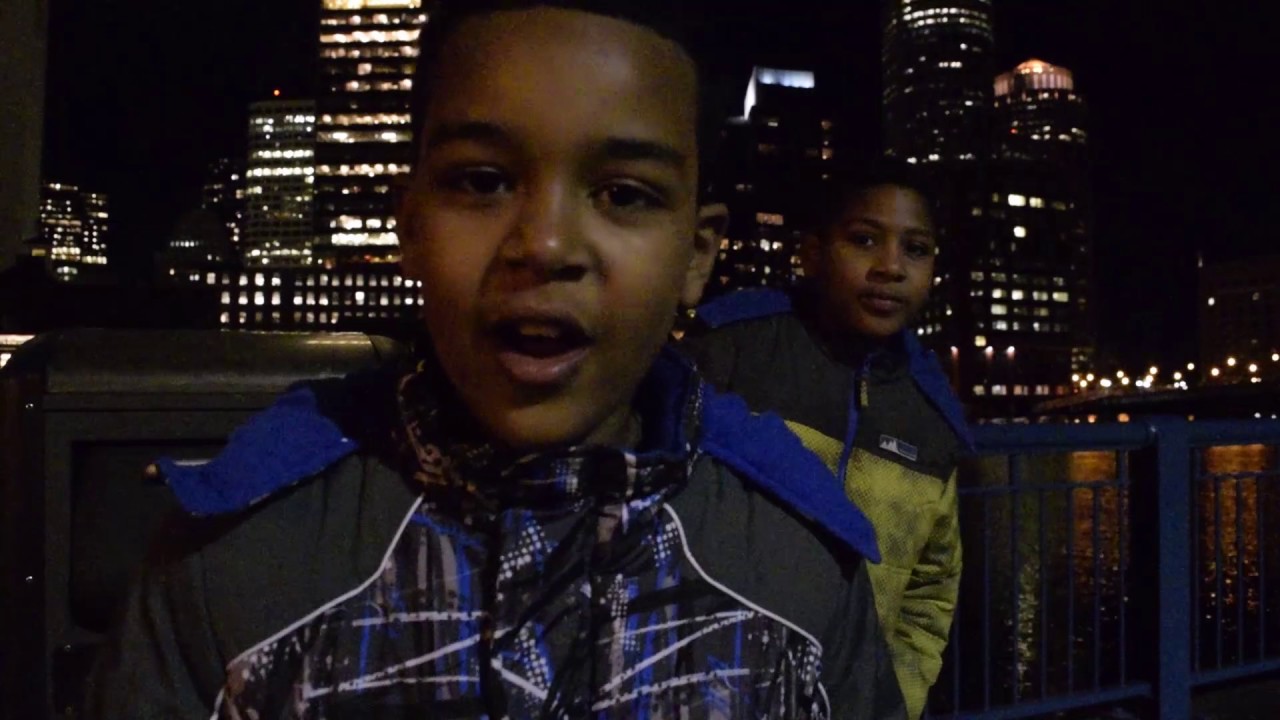
BOSTON — Stepping out last Friday night from a bustling Boston Children's Museum, Jesse, a curious 11-year-old from Roxbury, Massachusetts, spied something unexpected.
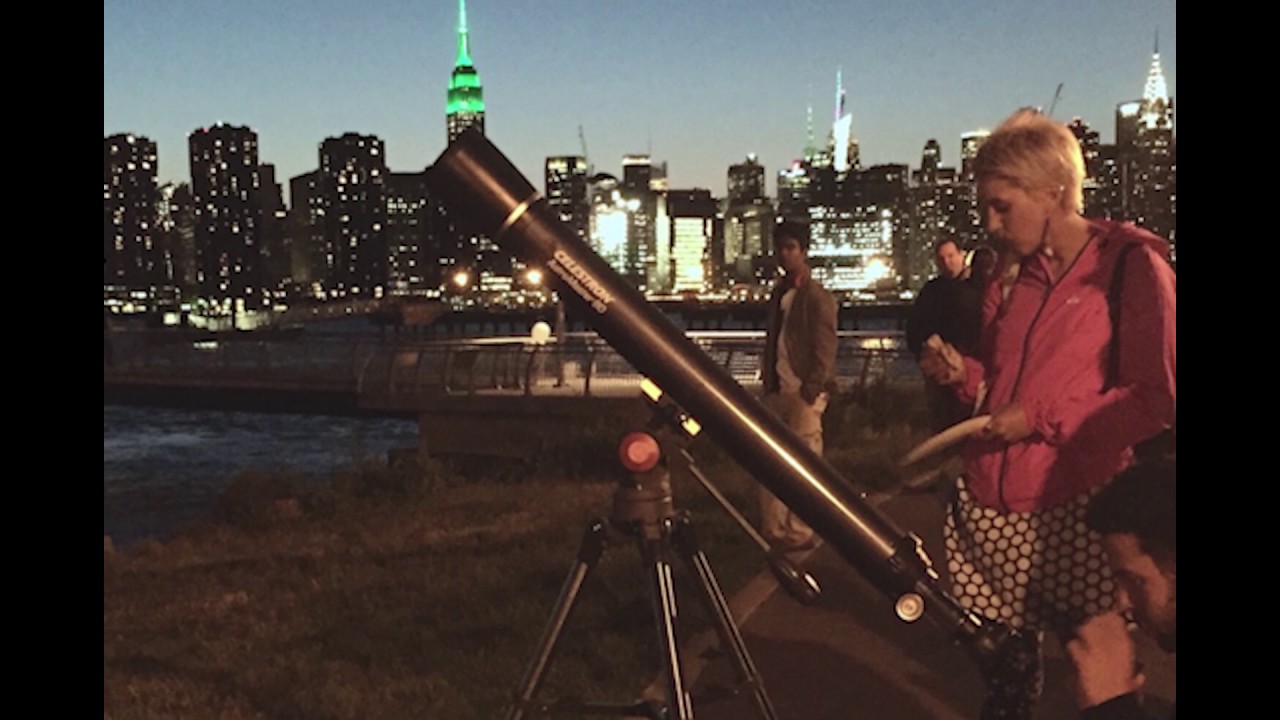
A few feet away, more museum patrons assembled moments before stood at a telescope, looking up at the darkening sky.
"What are you guys doing?" Jesse asked, striding up to the group, eyeing the telescope as his mother and little brother trailed behind.
"Looking at Saturn," a response came. "Want to see it?"
Jesse was game. He approached the complicated instrument, pressed his face to the eyepiece, and peered through.
"What do you see?" asked a group member.
"Nothing," said Jesse.
The group member, Michael O'Shea, a chummy, 26-year-old higher education consultant, gives a little advice to the unsuspecting astronomer, minor adjustments. A few seconds pass and victory — "Oh wow! I see Saturn. Mom, come look."
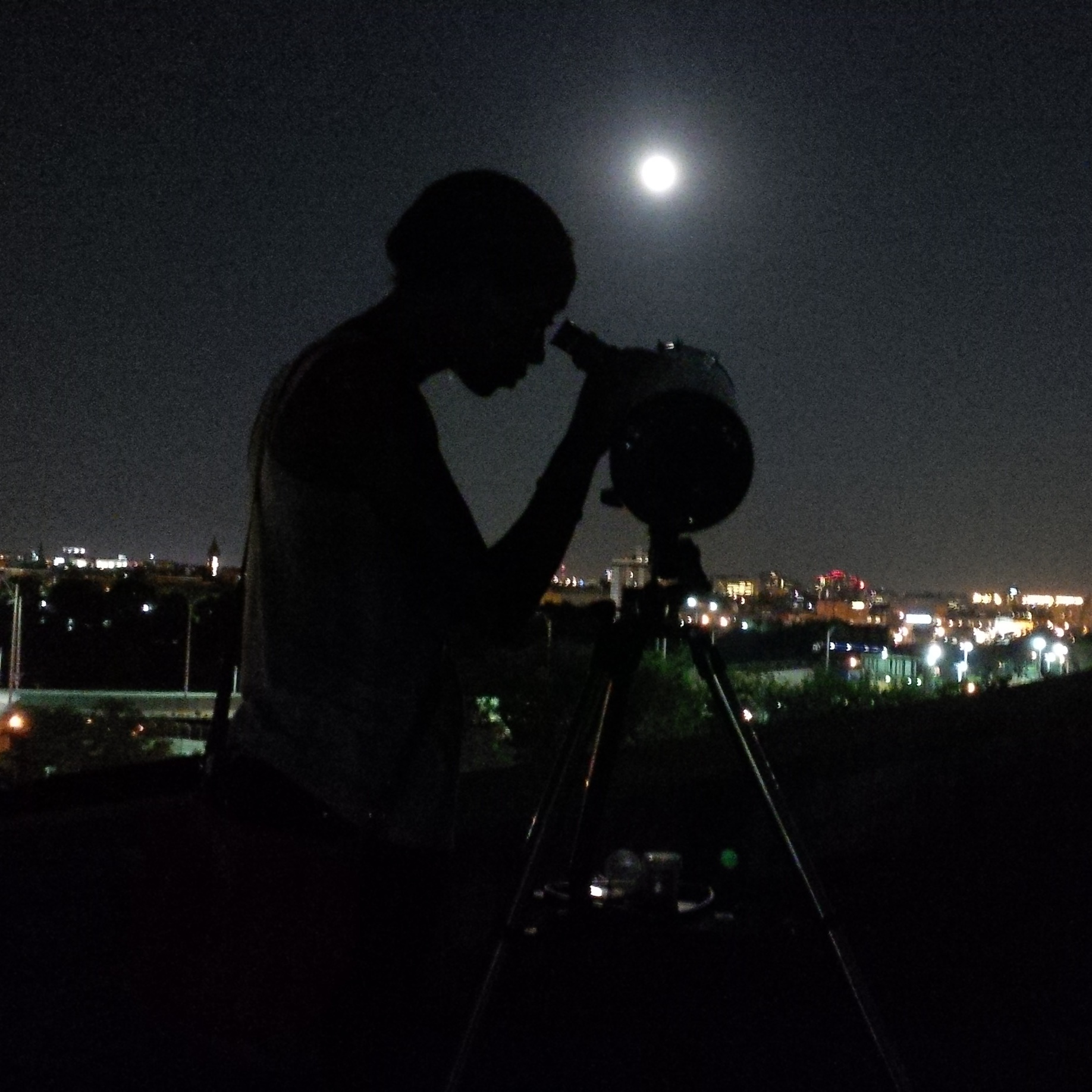
Discoveries like these are why Popscope started, O'Shea said. He leads a Boston chapter of stargazing enthusiasts called Popscope, an organization dedicated to sharing astronomy, science and a sense of community with people who might not otherwise be exposed to it.
Stargazing is usually considered the stuff of solitary time in open fields away from the noise and lights of the city, but Popscope shows it can be a communal urban activity too.
Origins of Celestial Fancy
Growing up in Chicago, O'Shea cultivated an early love of the night sky with a telescope he received for his 12th birthday. "It just blew me away visually, and I didn't have the words for it then. It blew me away philosophically, too," said O'Shea, who grew hungrier to explore the starry expanse — the streaking comets, supernovae, moons of Jupiter, the transit of Venus.
But the honeymoon with the sky would only last for little over a year. Living in the light-polluted electric grid of Chicago eventually meant he "ran out of stuff to see. My parents never took me out to the country to get that real night sky, and I just was sort of over it."
"Once you see starlight and really understand where it comes from, it changes you."
— Michael O'Shea, Popscope BostonO'Shea's astro-love did indeed dwindle, but it didn't die. The philosophical effect on his spirit had been too strong. In the passing years, he found inspiration from pictures sent by the Hubble Telescope of the early universe, and panoramic vistas from rovers roaming ruddy red Mars and snapping never-before-seen images. Then in college at McGill University in Montreal, O'Shea met someone who shared his passion for the cosmos. Their friendship marked the beginning of big things for both of them.
A Partnership Is Forged
Viva Dadwal left New Delhi, India when she was 17. As a middle-class female raised in a densely-populated urban area surrounded by poverty, access to public space at night was a non-starter and buying a telescope was unheard of. However, astronomy as a subject fascinated her. Though she lacked the first-hand experience of seeing many stars, she read and watched anything she could about the cosmos, finding a sense of place in her explorations.
When she arrived in Canada for college, she quickly learned she could access what to her were exotic items and experiences. Walking through the park at night as a female wasn't laughable here.
Prior to starting Popscope, O'Shea and Dadwal experimented with another endeavor they called Bookstop — portable bookshelves set up around campus bus stops. During these rounds of "loitering," Dadwal and O'Shea would converse with book browsers and each other on a span of topics, and it wasn't long before they uncovered their mutual love of astronomy.
"No way. You're not rich. I'm not rich," Dadwal recalled telling O'Shea when he broached the idea of the two of them buying a telescope. "I couldn't believe it." But then they did — a telescope and a tripod for just under $100.
The Rise of an Idea
With telescope in hand, Dadwal and O'Shea set out into the streets of Ottawa. They found a spot across from a Salvation Army building with a decent sky clearing and minimal street light glare. That night, Saturn was showing off in the low eastern sky. O'Shea introduced his partner to a close-up view of the gas giant, spinning around in its rings, millions of miles away.
It was then that, as O'Shea puts it, "a beautiful collision occurred."
A man with ragged clothes and unkempt features ambled up to them. O'Shea and Dadwal's instincts told them this man was of the sort to be avoided, but something in his swagger steered them differently. "That might be a case where it's like, speak to the hand," said Dadwal. "But the first thing he asks us is if we're looking at Saturn. Then this presumably homeless guy tells us what he knows about it, and he goes on to list each of its moons."
"He just schooled us on his knowledge of Saturn," remembered O'Shea — and the conversation attracted others walking by who wanted to stop and look. Dadwal knew they were on to something.
"I'm passionate about people. We thought this was a great way to meet other people and engage others in a unique way," said Dadwal. She thinks if it hadn't been for that fateful encounter with the Saturn street scholar, "we might never have started #Popscope."
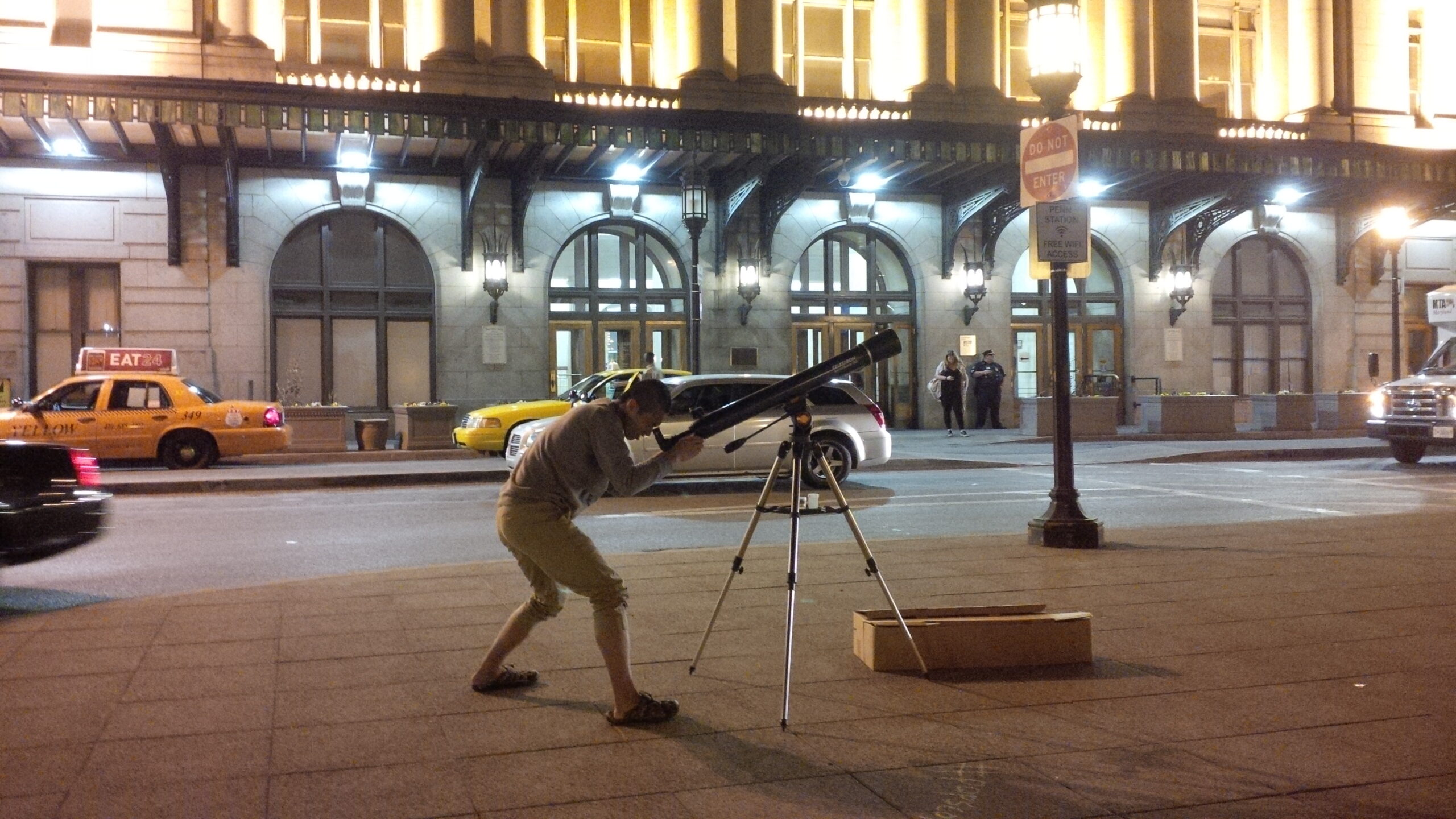
They started holding pop-up viewing sessions all around the city. The recipe was simple: people would pass by, eyeing the telescope. O'Shea or Dadwal would engage them, beckoning them to take a look. Usually a conversation started — sometimes about the stars, sometimes about life. Both of them saw how this kind of bonding could transform a public space into a social observatory, and when their inevitable relocation after graduate school came, they wanted to spread it.
"We just had to keep doing it. It felt really right," said O'Shea. "I felt that same joy again I'd felt at 12."
Energized by the rush of their new experience, one of O'Shea's friends suggested they apply for a grant from the Ottawa chapter of the Awesome Foundation, a global organization that gives microgrants to projects in the arts, technology, and community development. "We look for initiatives that tap into our sense of surprise and delight. They are atypical and experimental by design," said Kara Brickman, dean of the Awesome Foundation's Boston chapter.
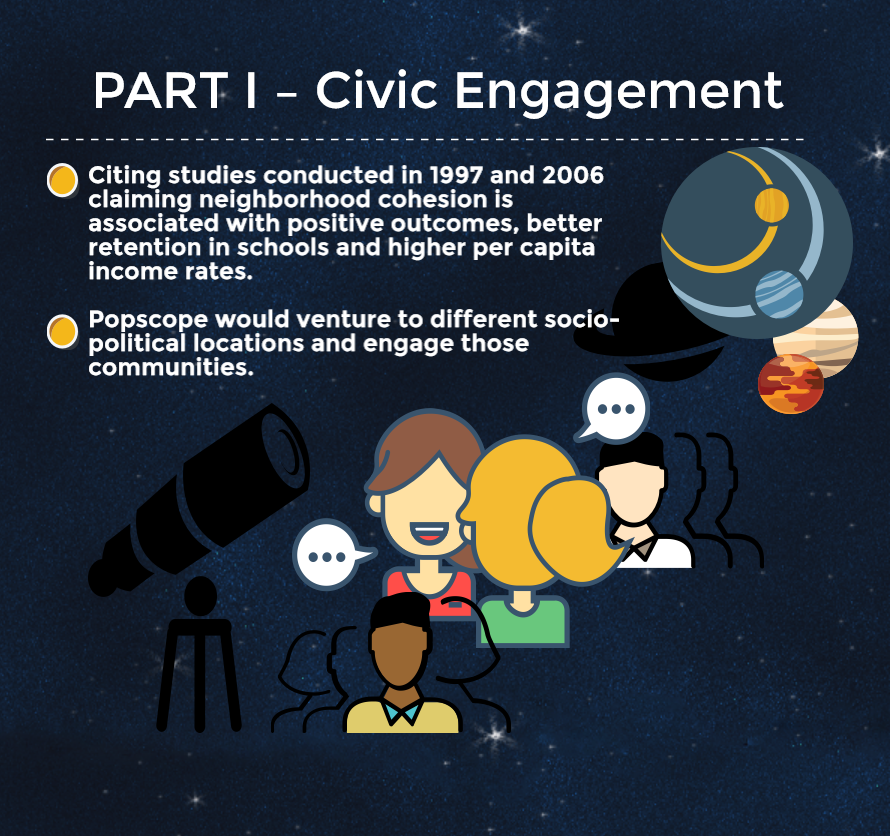
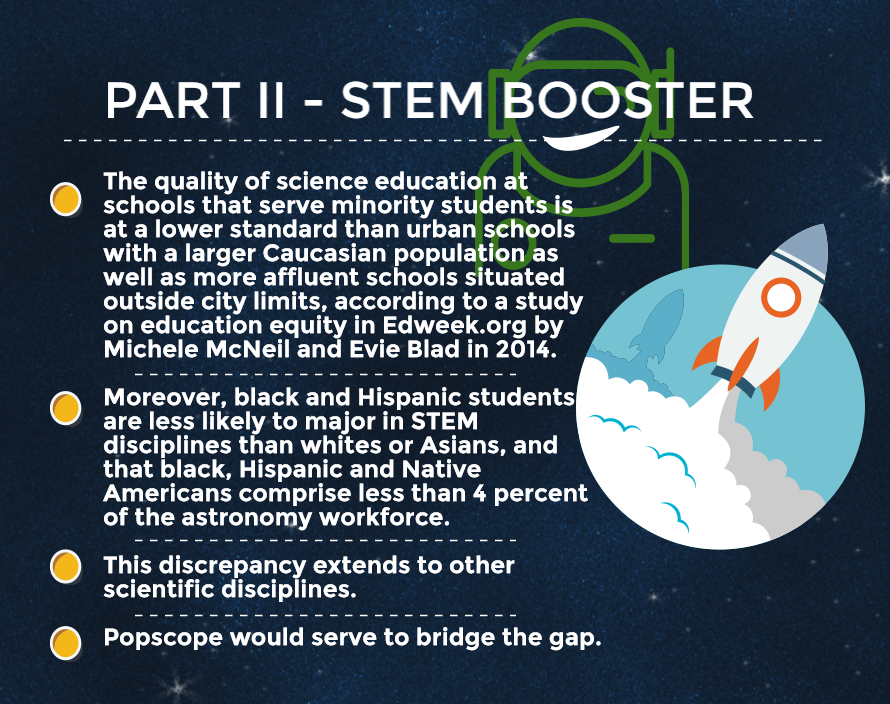
Writing the Popscope grant proposal forced Dadwal and O'Shea to fine-tune their aims. A top priority centered on inclusion — they wanted to get out of their comfort zones and meet people who didn't necessarily look like them or talk like them. The new organization would run on an all-volunteer basis and empower people within their own communities to take on a telescope and do it on their own.
The mission, they finally decided, was three-fold with an emphasis on reaching lower-income areas and an overarching principle of "Bringing communities together through public astronomy."
Popscope's Mission in 3 Parts
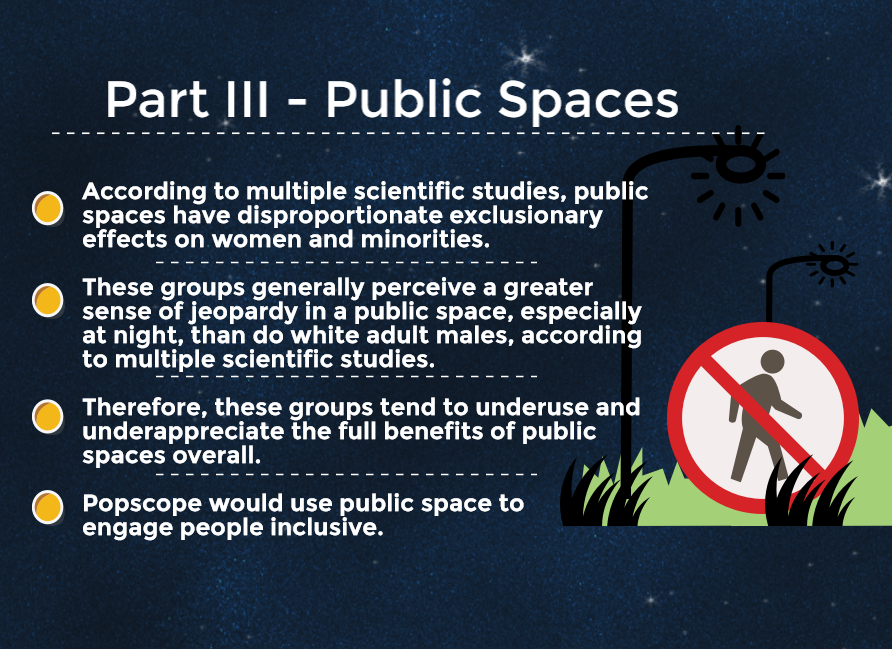
Show Them the Money
A month after submitting their proposal, they received a congratulatory letter in the mail along with a check for $1,000. With the money came pressure. A major organization believed they were up to something important and entrusted them with a hefty chunk of change. Most of the grant went to transportation and simple marketing tactics — designing a logo for stickers and t-shirts, a social media push, and two new telescopes. Then they slung their 'scopes over their shoulders, determined to make their marks.
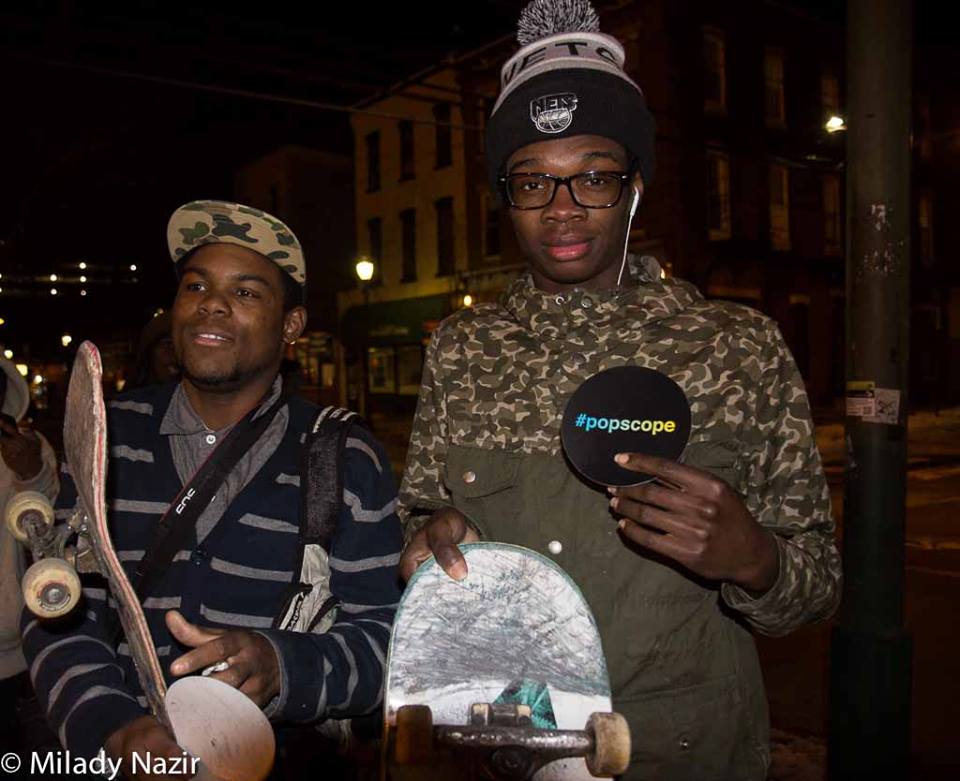
Popping Their Collars
By June 2014, their following had gotten bigger. A small band of loyal volunteers, astronomers and enthusiasts were regularly popping up with the originators, eventually becoming members. But Dadwal and O'Shea were also recent graduates with separate opportunities springing up elsewhere. Popscope in Ottawa would need a new set of leaders for the cause, but it was also time to evolve.
"When Viva and I left, the crew in Ottawa carried the torch," said O'Shea. "We didn't really skip a beat, and the thought was it's time for Popscope to expand anyway. We brought it with us."
Dadwal moved to Baltimore in the fall to study at Johns Hopkins University. Around the same time, O'Shea got into grad school at the University of Pennsylvania, where he connected with an afterschool program to train teenagers to mentor middle-school students on how to teach basic astronomy and stargazing techniques. The evolution continued. Other members joined, then they branched out too. Popscope was now active in five cities, including Jacksonville, Fla., and New York City.
The Ottawa chapter partnered with the Canada Science and Technology Museum to hold astronomy pop-up sessions around the city. Attilla Danko, a software architect and museum volunteer working with Popscope, said, "Anybody can be an astronomer. It's our oldest science, and in some ways, it's our simplest. All it takes is eyeballs making observations and asking questions. It's where science started and it's where a lot of future scientists and philosophers get their start."
Telescopes, Unite!
Now solo in Baltimore, Dadwal began to recruit new members to what would become the newest chapter in the Popscope family tree. Ariel Hicks, formerly from Missouri and now a cardiovascular research assistant at Johns Hopkins, met Dadwal at a coffee shop in February 2015. Casual conversation uncovered Dadwal's astronomical moonlighting, and Hicks knew quickly she wanted in.
"I liked the social aspect and, come on, I don't know anybody who straight up doesn't like astronomy. I mean who's ever said they just hate the moon," said Hicks. To her, the telescope is a bridge — with it, strangers she'd otherwise never approach become less strange. There is a shared "childhood curiosity through this outlet that can benefit a community in so many ways."
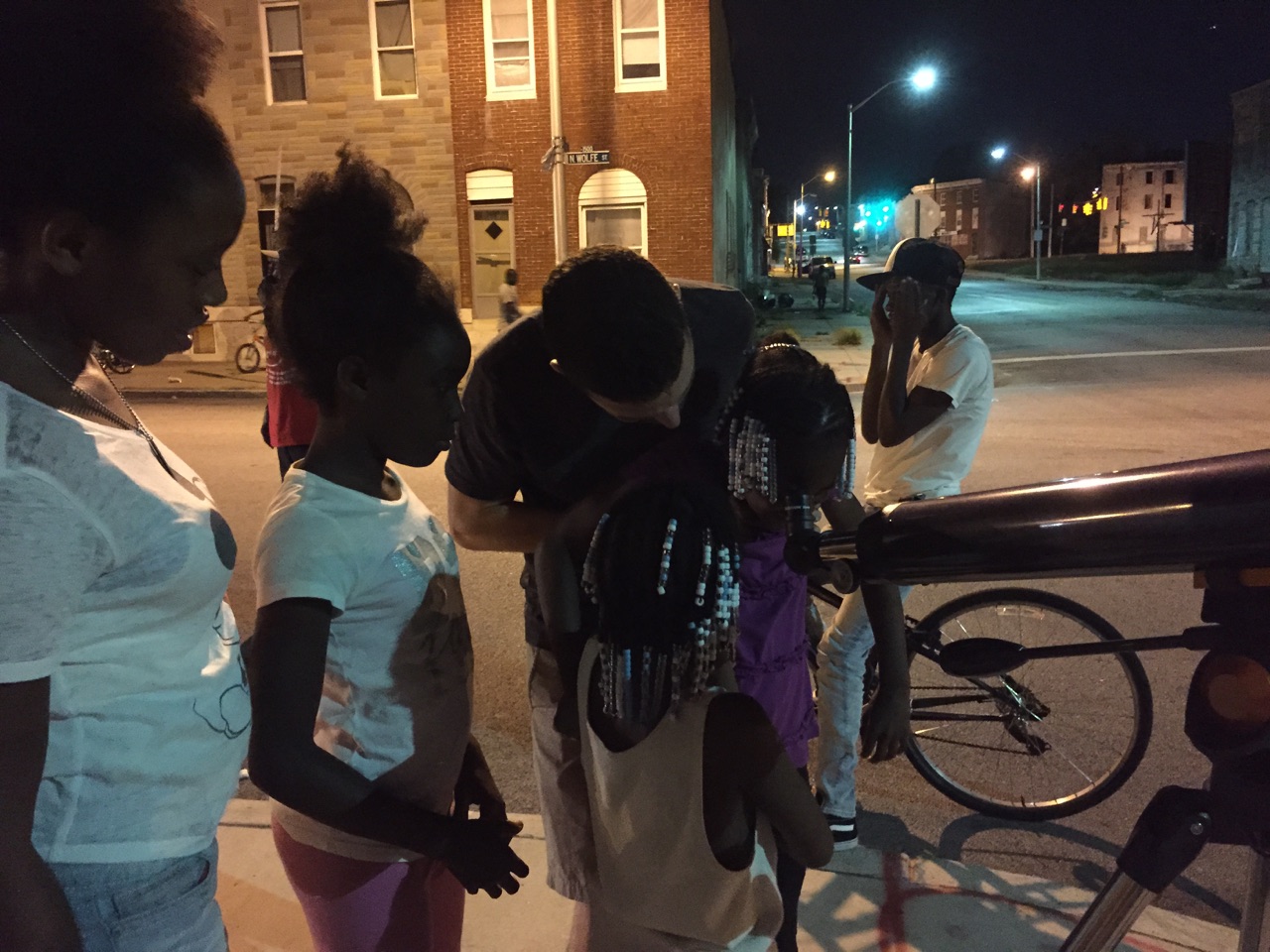
Dadwal and Hicks helped cultivate a 12-person team in Baltimore with more added every month. Through a WhatsApp messaging system, they coordinate pop-up sessions at least once a month. One member holds Popscope viewings in Charles Village. Another sets up in Federal Hill, weaving Popscope into his personal non-profit events.
"It's kind of cool because you can do with it what you want," said Hicks.
Audrey Buckland, 25, had lived in Baltimore for two years when she came on board after getting ice cream with friends Dadwal and Hicks one night. "Viva brings along a telescope, and we started looking at the moon. I hadn't done that since fourth grade," said Buckland, "but I remember loving it." She maintains that she is no serious astronomer, but enjoys breaking away from a demanding job as public health research associate to do public outreach at night. "I mean the moon and planets and stuff is cool — it's awesome — but the main draw for me was the social aspect. That's what I really like about Popscope. It's so not normal, yet so simple," said Buckland.
"One evening in late April, equipped with a telescope and a splash of humility, we popped up at Lexington Market, a place locals say shows the personality of the 'real' Baltimore," said Dadwal about her and Buckland's effort to help a city heal after its 2015 protests and riot over the death of Freddie Gray. In its own modest way, Popscope tried to use its telescopes to help bring a divided city together. Buckland said protesters and police, more shocked at seeing "a bunch of geeks who don't belong" looking through telescopes in Lexington Market, set aside their differences, albeit for a moment, and got excited about seeing Mars.
Dadwal shared the story about one woman taking part in the protests who told her gestures like Popscope are what people should hear about Baltimore. Most people, she told Dadwal, do care about each other.
Urban Astronomy Is a Thing
It can be challenging to find celestial beauty amid bright city lights. Usually, Popscopers set their telescopes on easily found targets, like the moon, though their typical instrument's 90 millimeter magnification is strong enough to reveal Saturn's rings or details of Mars and Venus. But while the view might be more vibrant out in the desert and countryside, rural settings wouldn't yield the same foot traffic the group seeks to attract. That would defeat the purpose.
"I'd rather have lots of people getting 85 percent of the view and not knowing the difference," said Popscope volunteer and Boston Children's Museum education liaison Leah Swinson.
Swinson worked to link Popscope to Global Shapers, an initiative of the World Economic Forum that encourages young people by giving them funds to undertake projects to improve their communities. The initiative also doled out a small additional bonus to send Buckland to India, where she spent a week training community leaders in Mumbai how to use a telescope for the purpose of bringing people together. With that effort, the Popscope movement had officially gone international.
A New Chapter Opens in Boston
O'Shea got his masters and spent a little time back home in Chicago figuring out his life's next move. Not one to twiddle away in an idyllic state, O'Shea wrote another grant proposal — this time to Celestron, a big name in telescope manufacturing. Once again, he was successful. Celestron is now a Popscope sponsor, providing brand new, state-of-the-art prosumer gear to all chapters. Done with school, O'Shea needed gainful employment, which came in a higher-education consulting job in Boston. He brought his telescope with him.
The telescopes from Popscope's Boston chapter have drawn crowds around the city — in the South End after the summer's Jazz Festival, outside Faneuil Hall, and at the sidewalks of South Station. The group has also tapped experts at the Amateur Telescope Makers of Boston and the Science Museum. "They helped advise the Popscope organizers while they were getting started and collaborate with Popscope on events. They're great to have around when space-savvy people come by with really hard questions," said Alyssa Daniels, the Children's Museum Science Programs Manager.
Back at the Children's Museum, Saturn and Mars sank from view, but a bustling throng of planet-watchers marveled at the moon finally rising over the city skyline. In less than 10 minutes, the moon was out full-bodied.
"Whoa. It's like it's in high definition," said a new 13-year-old viewer, enjoying her first-ever look through a telescope as she stood on a stool to reach the viewfinder. "It looks real now."
"A lot of the residents were saying how they don't really take a moment to look up and take in the stars," said Swinson showing a toddler to a magnetic board with colorful magnets of the planets — her part in extending one of Popscope's core tenets of inclusivity by engaging younger children with more simple, space-related activities.
"Popscope is a vehicle for change insofar as it connects people to each other… the effort to get human beings to interact with each other and be kind to each other under this grand setting of a night sky is critical in the process of starting positive change."
— Michael O'Shea, Popscope BostonThinking about how Popscope can rate that sort of tangible 'positive change', Dadwal struggled when thinking about how they could ever get a handle on the metrics. "When we're asked to measure our success, it becomes difficult to measure magic or measure interactions or measure relational chemistry. I don't know how to do that. What does it mean to have impact? At this point, we're not sure how to measure that."
O'Shea thought back to his waning interest in looking up when he was a kid. He thought about kids today — especially in light-polluted and economically depressed parts of the city — who don't get the same seeds planted he got when he was their age. "I obviously didn't become an astronaut or anything, but I was sewn with seeds of wonder, and that had nothing but a positive impact on me. I think it's unfortunate that might be the same for lots of boys and girls growing up under a haze of light and distractions that could rob them of that," he said.
If the folks at Popscope see their mission fully realized, O'Shea shouldn't have to worry. He, like Dadwal, will keep looking up. ###